







When evaluating a16,000-20,000 lb. vehicle lift, it’s easy to focus on lifting capacity. A 16K lift is a 16K Lift. A 20K lift is a 20K lift—at least on paper.
Experienced fleet managers know that capacity is only part of how a lift performs in the field. Two lifts with the same capacity rating can vary significantly in stability, durability, and long-term performance. The difference isn’t just specs – it’s the engineering design, materials and how the lift is built to perform over time.
Not All Lifts Are Built the Same
A lift’s rating tells you what it can lift—but not how it is built. While capacity is often the first specification buyers look at, it only scratches the surface of overall performance.
The quality of the steel, the structural design, and the reliability of key components ultimately determine how a lift performs over years of daily use.
Most competitive lifts in the 16,000 to 20,000 lb. range may share capacity ratings, but the engineering behind them can be much different. The following comparison highlights some of the design distinctions commonly found between Mohawk and many competing models in this class.
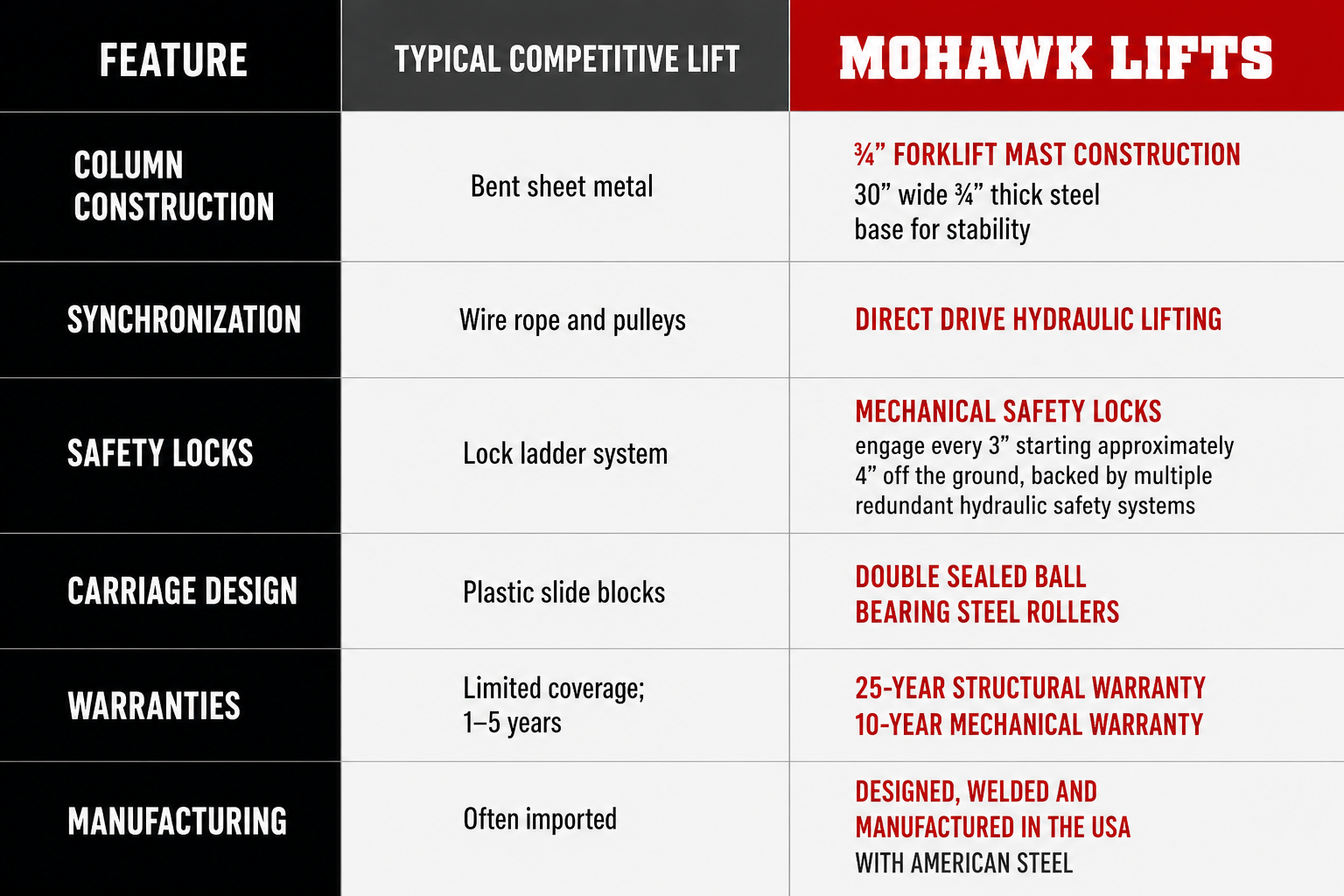
To learn more and see the Mohawk difference take a look at our Dare to Compare 16,000-20,000 lb. capacity lifts.
Column Construction
One of the biggest differences between vehicle lifts is the type of steel used in their construction. While many lifts rely on formed sheet metal components, Mohawk builds its lifting systems using heavy ¾-inch forklift mast steel engineered for demanding industrial applications.
Many lifts rely on bent sheet metal columns and lighter structural components to reduce manufacturing costs. While these designs may achieve the required lifting capacity, they often provide less rigidity under load and can experience greater wear over years of continuous operation.
The Mohawk Approach – Mohawk’s structural and column components are manufactured from heavy ¾-inch forklift mast steel, the same material engineered to withstand demanding industrial applications. Combined with a wide 30-inch base, this construction creates a more stable lifting structure designed to minimize flex and maintain stability throughout the lifting cycle.
Synchronization
Traditional two-post lift designs often rely on wire ropes and pulleys to maintain synchronization between lifting carriages. Mohawk takes a fundamentally different approach with a patented hydraulic synchronization system that removes many of these wear-prone components from the equation.
Wire rope systems require proper tension and periodic inspection to maintain optimal performance over time. As these components accumulate wear through years of lifting cycles, adjustment or replacement may eventually be required as part of normal maintenance. In high-cycle fleet environments, these maintenance requirements can contribute to increased downtime and ownership costs.
The Mohawk Approach — Mohawk’s patented hydraulic synchronization system is engineered to deliver smooth, consistent lifting performance while helping minimize maintenance requirements throughout the life of the equipment. By replacing traditional wire rope and pulley systems with hydraulic synchronization technology, Mohawk eliminates many of the wear-prone components commonly found in conventional lift designs.
Safety Locks
Mohawk incorporates all-position mechanical locks that engage every three inches beginning just four inches off the ground. This provides technicians with more available lock positions throughout the lifting range, allowing vehicles to be secured at a wide variety of working heights.
Many lift designs utilize locking systems with fewer lock positions that are only available after the vehicle has been raised significantly – generally 19”+. While these systems meet industry requirements, they limit technician safety and flexibility when work needs to be performed closer to the floor.
The Mohawk Approach — By providing an all-position mechanical lock engagement every 3” in both columns starting only 4” off the ground and continue to full lifting height, Mohawk gives technicians greater flexibility to position vehicles at the most efficient working height while maintaining the security of a mechanically locked lift. Combined with multiple redundant hydraulic safety systems and robust structural construction, these features help create a safer and more versatile service environment.
Built to Deliver Long-Term Value
Mohawk’s engineering philosophy centers on long-term durability rather than short-term cost reduction. From ¾-inch forklift mast steel and sealed steel rollers to patented hydraulic synchronization technology, each component is carefully selected to withstand the demands of daily fleet service.
Vehicle lifts operating in fleet environments are often expected to perform thousands of lifting cycles over many years. In these applications, maintenance requirements, component replacement, downtime, and service life can have a greater impact on total ownership cost than initial purchase price alone.
The Mohawk Approach — By focusing on structural strength, heavy-duty components, and simplified maintenance requirements, Mohawk designs lifts for decades of reliable operation. That commitment is reflected in an industry-leading 25-year structural warranty and 10-year mechanical warranty, providing fleet managers with confidence that their investment is built to deliver value long after installation.
Built for the Realities of Fleet Service
For fleet operations that run lifts day after day, those differences matter.
For fleet maintenance facilities, municipal garages, utility operations, and commercial service shops, that distinction matters. These environments don’t lift vehicles occasionally—they lift them repeatedly, day after day, year after year. For the shop owner and technicians, structural integrity is just as critical as lifting capacity.
That’s where Mohawk stands apart. Instead of engineering to meet a price point, Mohawk engineers for long-term use—using heavy structural steel, proven lift architecture, and manufacturing standards designed specifically for demanding fleet maintenance environments. The result is a lift built not just to meet capacity ratings, but to consistently perform under them for years of service.
The Mohawk Difference
For more than four decades, Mohawk has earned its reputation by building lifts for some of the most demanding service environments in North America. Every lift is manufactured in the USA using American steel, including models such as the TP-16, TP-18, and ML-220XL, which are engineered to deliver the strength, stability, and durability required for years of commercial use.
Backed by an industry-leading 25-year structural warranty, Mohawk lifts provide fleet operators with the confidence that comes from investing in equipment built to perform long after many competing lifts have been replaced. When productivity, technician safety, and long-term reliability are critical, Mohawk continues to set the standard by which heavy-duty vehicle lifts are measured.
Ready to compare heavy-duty lift options for your fleet? Explore Mohawk’s full line of 16,000-20,000 lb. two-post lifts or contact our team to discuss the right solution for your operation.